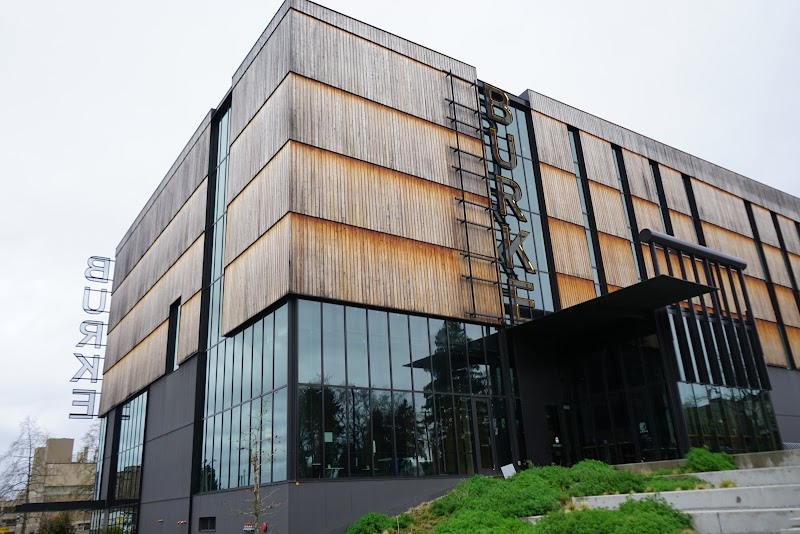
Burke Museum of Natural History and Culture
4.5(1,033)4.5 out of 5 stars, 1033 reviews Seattle, WA
About Burke Museum of Natural History and Culture
The Burke Museum offers a unique combination of interactive exhibits and visible, real-time scientific work, allowing families to observe archeologists and biologists in active labs. It's praised for being educational for all ages, with distinct floors for Arts & Culture, Biology, and Paleontology & Archaeology, making learning tangible and engaging.
What parents should know
Summarized from real visitor reviews.
Best for: Families seeking an educational outing combining natural history, culture, and active science.Parents looking for interactive experiences that engage both young children and teenagers/adults.Those interested in observing real scientific work, including archeology, biology, and paleontology.Families with a specific interest in birds, bees, or bats, especially when the 'Rare Air' exhibit is on display.A budget-conscious visit on the 'free first Thursday' or a Sunday for free parking.
Why families love it
- Features numerous interactive areas suitable for kids on all floors.
- Showcases active science labs and workspaces where visitors can watch archeologists and biologists working on projects.
- Includes a Biology floor with a dissection area (prep lab) where staff work on animals, often observed by children.
- Each workspace is accompanied by a whiteboard providing information about the ongoing work.
- Staff (e.g., Sophie, a Receptionist) are described as personable, knowledgeable, and welcoming.
- The museum is well organized and prepared, with impressive organization across its three themed floors.
Insider tips
- Plan your visit for the 'free first Thursday' to avoid the $20+ admission fee, especially if budget is a concern.
- Be prepared for potentially graphic content in the Biology floor's dissection lab, and consider if it's appropriate for your child's sensitivity level.
- Check the museum's schedule for ongoing special exhibits, such as the 'Rare Air' exhibit (available until March 31, 2025), which can enhance the visit.
- Consider visiting on a Sunday to take advantage of free parking.
- Encourage children to observe the active workspaces and read the accompanying whiteboards for detailed explanations of ongoing projects.
Good to know before you go
- Paying the full $20+ admission if you are concerned about the museum's size-to-cost ratio, unless a specific exhibit justifies the price for you.
- Bringing very sensitive young children to the Biology floor's dissection lab without prior preparation, due to potentially graphic content.
- The standard admission ticket of $20+ is considered steep for the museum's size by some visitors.
- The animal preparation/dissection area on the Biology floor can be quite graphic, which parents of sensitive children should be aware of.
- Value
- Standard admission is $20+, which some reviewers find 'extremely steep' for the museum's size. However, others state the 'admission is worth it' especially when considering special exhibits or the unique opportunity to see scientists at work. A significant value proposition is the 'free first Thursday' for general admission and free parking available on Sundays.
- Accessibility
- No specific accommodations for special needs were mentioned in the reviews.
- Safety
- No specific safety features were mentioned in the reviews.
What parents say
"A nice, yet small natural history museum. There are quite a few interactive areas perfect for kids. This is a perfect museum to visit on the free first Thursday, otherwise the $20+ ticket is extremely steep for how small this museum is."
4 weeks ago
"Absolutely wonderful. Everything is well organized, well prepared, and the working staff are all nice to us. It's educational for adults and teens, and also entertaining for young kids. I recommend this as a must go!"
a month ago
"Fantastic museum. The first floor features Arts and Cultures, the second floor is dedicated to Biology, and the third floor focuses on Paleontology and Archaeology. My favorite part of this museum is that, no matter which floor you're on, you can see workspaces and, at times, people working on their projects within those spaces. The Biology floor has a dissection area (prep lab) where you can watch people working on animals. I’m always surprised to see many children there watching. The preparation of animals can be quite graphic, but I think it’s a good way to learn about this aspect of the li"
4 months ago
Reviews sourced from public Google data.